Strengthening Mental Health Through Connection, Collaboration, and Competency: Reflections from NAMICon 2026

Strengthening Mental Health Through Connection, Collaboration, and Competency: Reflections from NAMICon 2026

Strengthening Mental Health Through Connection, Collaboration, and Competency:

Reflections from NAMICon 2026

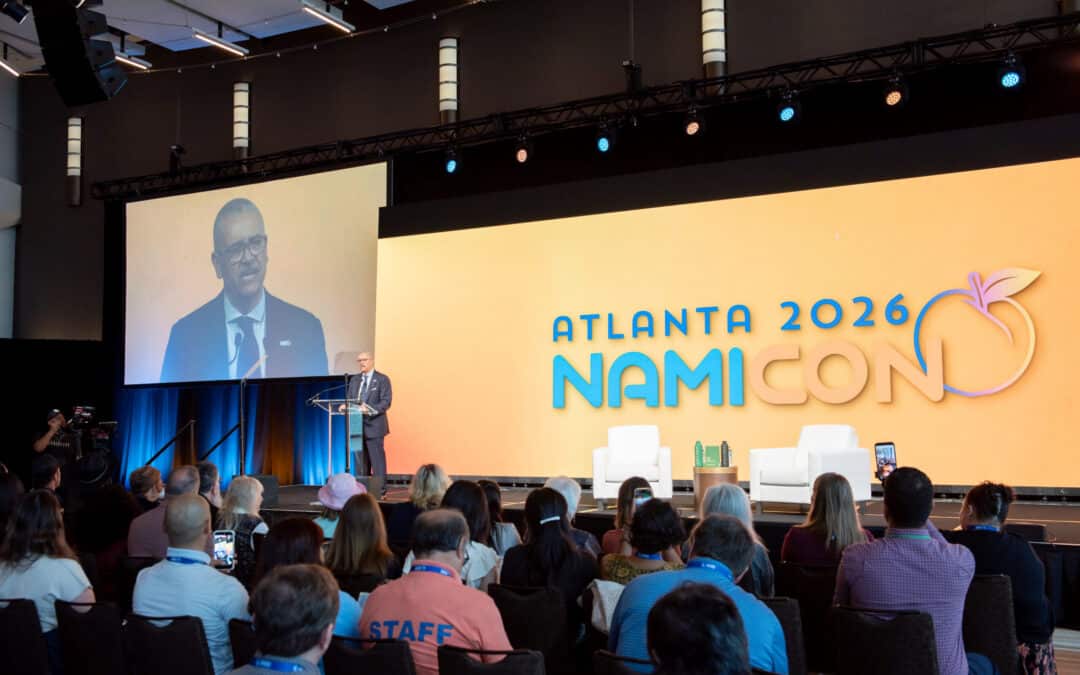
The National Center for Adoption Competent Mental Health Services joined thousands of mental health professionals, advocates, individuals with lived experience, family members, and community leaders at NAMICon 2026 in Atlanta, Georgia. As one of the nation’s largest gatherings focused on mental health awareness, education, and advocacy, NAMICon provides a valuable opportunity to engage in meaningful conversations about the future of mental health care and the importance of ensuring that children, youth, and families impacted by child welfare are not left out of those discussions.

Throughout the conference, one message was clear: mental health systems are evolving, but there remains a critical need for specialized knowledge, workforce development, and cross-system collaboration to meet the diverse needs of children and families impacted by child welfare, including adoption, foster care, and kinship care. For the National Center, NAMICon was an opportunity to elevate the importance of adoption and permanency-competent mental health services while connecting with professionals and organizations committed to improving outcomes across the behavioral health continuum.


Why Adoption Competence Matters in Mental Health Spaces

Children and families impacted by foster care, adoption, kinship care, guardianship, and other permanency experiences often navigate challenges that extend beyond traditional mental health concerns. Yet many mental health professionals receive little formal training on how these experiences affect assessment, diagnosis, treatment planning, and family engagement. As the National Center connected with attendees from across the country, many professionals shared that they frequently work with children and families who have experienced child welfare involvement but have had limited opportunities to receive specialized training in these areas.

These conversations reinforced the importance of building a workforce that understands the unique experiences of children and families impacted by child welfare and can provide services that are responsive, relationship-centered, and grounded in permanency.


Sharing Resources and Building New Partnerships

NAMICon brought together professionals from a wide range of sectors, including community mental health organizations, hospitals, advocacy groups, peer support organizations, educational institutions, state agencies, and private practice settings. Throughout the conference, the National Center connected with attendees from across the country who were eager to learn more about adoption competence, workforce development, and strategies to strengthen mental health services for vulnerable populations.
Many conversations focused on the growing need for practical tools and training that help professionals better understand the intersection of trauma, attachment, loss, and identity. Attendees also expressed interest in approaches that support collaboration between child welfare, behavioral health, education, and community-based organizations.

These discussions highlighted an encouraging trend: professionals increasingly recognize that improving mental health outcomes requires coordinated systems that work together to support children and families holistically.


Key Themes from NAMICon

Several themes emerged throughout the conference that closely align with the National Center’s work.

  • The Importance of Lived Experience: Across sessions and conversations, there was a strong emphasis on ensuring that individuals with lived experience are actively involved in shaping services, policies, and systems. This commitment mirrors the National Center’s belief that meaningful change happens when the voices of those directly impacted help guide decision-making and service delivery.
  • Workforce Development Remains a National Priority: Mental health workforce shortages continue to affect communities across the country. Professionals consistently highlighted the need for accessible, high-quality training opportunities that increase confidence, competency, and retention. Specialized training programs such as NTI and TAC can help address these needs while equipping professionals with skills that improve outcomes for children and families.
  • Collaboration Drives Better Outcomes: Another recurring theme was the need to break down silos across systems. Mental health, child welfare, education, health care, and community organizations all play critical roles in supporting children and families. Strong partnerships across these systems enable earlier intervention, more coordinated care, and improved long-term outcomes.


Looking Ahead

The National Center left NAMICon energized by the conversations, connections, and shared commitment to strengthening mental health services nationwide. The conference reinforced the growing recognition that children, youth, and families impacted by child welfare require services that acknowledge their experiences, honor their relationships, and support their lifelong well-being.

As the National Center continues its work with States, Tribes, territories, providers, and community partners, we remain committed to expanding access to adoption and permanency-competent mental health services through training, technical assistance, workforce development, and systems change.

The conversations at NAMICon served as a powerful reminder that when professionals come together to share knowledge, learn from lived experience, and build partnerships, meaningful progress is possible. We look forward to continuing these conversations and working alongside partners nationwide to ensure that every child and family has access to the support they need to thrive.

Stay Connected to Our Work in Action

Follow us for updates across states, tribes, and territories, plus conference highlights, training, resources, and insights on adoption competent mental health care


Beyond Intervention: Why Foster Care Must Be Paired with Adoption Competent Mental Health Care

Beyond Intervention: Why Foster Care Must Be Paired with Adoption Competent Mental Health Care

Beyond Intervention: Why Foster Care Must Be Paired with Adoption Competent Mental Health Care

Recent commentary from the Child Welfare Wonk article, Weekly Wonk: Foster Care as Children’s Behavioral Health Policy, highlights a critical reality: foster care is increasingly serving as a de facto mental health intervention for children and youth. This framing reflects what many professionals in child welfare and behavioral health already know: children impacted by child welfare care often present with significant, complex mental health needs shaped by trauma, loss, and disrupted relationships.

Emerging perspectives from Child Welfare Wonk underscore several important shifts in how foster care is functioning within today’s service landscape:

  • Foster care is increasingly functioning as a frontline mental health response, with many children entering care due to unmet behavioral health needs rather than solely safety concerns.
  • The child welfare system is not designed to deliver mental health treatment, creating a mismatch between children’s needs and the services they receive while in care.
  • There is a critical shortage of accessible, appropriate mental health services for children and families, which contributes to system strain, placement instability, and poorer outcomes.

But if foster care is being used as a mental health response, we must ask a harder question: Are we equipping systems to meet those needs effectively?

Foster Care Is Not an Intervention. Relationships Are.

Foster care, in itself, does not treat trauma. Placement alone cannot address grief, identity development, attachment disruptions, or the lifelong need for connection and belonging. What matters most is what happens within and around that placement:

  • The quality of relationships
  • The stability of caregiving environments
  • Access to responsive, specialized mental health services

Without these, foster care risks becoming a system that contains need rather than heals it.

The Missing Link: Adoption Competent Mental Health Care

If we accept that many children in foster care require mental health support, then we must also recognize that not all mental health care is equipped to meet their needs. Adoption competent mental health care provides a critical, often missing layer of support by ensuring that providers are trained to:

  • Understand behavior through the lens of trauma, loss, and relationships
  • Support attachment between children and caregivers
  • Help children and youth make meaning of their experiences and identity
  • Engage families as central partners in healing

Adoption competence is not a niche specialization. It is a necessary adaptation of mental health systems to better serve children impacted by child welfare.

From Crisis Response to System Design

The current reliance on foster care as a mental health intervention reflects broader gaps in upstream prevention and in community-based services. However, it also presents an opportunity to redesign systems so that placement is not the primary intervention, but part of a coordinated, healing-centered approach. This means:

  • Integrating adoption competent practices across mental health and child welfare systems
  • Building workforce capacity through training and implementation support
  • Strengthening cross-system collaboration so services are aligned, not fragmented
  • Centering lived experience to ensure services reflect real needs
A Path Forward

We do not need to choose between child welfare and mental health. We need to align them more effectively. By embedding adoption competence into systems of care, we can move from:

  • Placement to purposeful permanency
  • Crisis response to sustained well-being
  • Services to relationships that heal

Foster care may continue to play a role in meeting children’s needs. But without the right support, it cannot and should not be the intervention itself.

Children and families deserve more than placement. They deserve systems designed for healing.

Looking for Additional Resources?

Visit the Knowledge Hub to access models of intervention, training resources, and practical tools to strengthen cross-system collaboration and improve outcomes for children, youth, and families. 

When “Just Get Therapy” Isn’t That Simple: The Access Gap in Adoption-Competent Care

When “Just Get Therapy” Isn’t That Simple: The Access Gap in Adoption-Competent Care

When “Just Get Therapy” Isn’t That Simple:

The Access Gap in Adoption Competent Care

The Search That Few Talk About

It often begins with hope. An insurance directory. A list of therapists who describe themselves as trauma-informed or child specialists.

Then the questions begin.

Too often, the answers are unclear or reveal that adoption-specific dynamics are not part of the clinician’s training.

Families may encounter long waitlists, limited in-network providers, or clinicians who unintentionally minimize grief with comments like, “But they have a forever family now.” They may also encounter therapy models that focus primarily on behavior without addressing underlying trauma, identity development, and loss.

What begins as a hopeful step toward healing can quickly become discouraging. When the search becomes exhausting, some families stop looking.

When Coverage Doesn’t Equal Access

For families who rely on Medicaid or specific insurance plans, options may narrow even further.

Medicaid plays a central role in supporting children and youth connected to the child welfare system. As highlighted in a recent U.S. Government Accountability Office (GAO) report on Medicaid coverage for former foster youth, federal policy allows young people who age out of foster care to remain eligible for Medicaid coverage through age 26.

Yet while Medicaid and most private insurance plans technically cover mental health services, adoption competent specialization is not defined or required within those coverage standards.

In many communities, clinicians with deep adoption expertise are simply not available in-network.

The result is a quiet inequity. Families who most need specialized support may face the greatest barriers to accessing it.

Why Competency Matters

Adoption competent counseling does more than address symptoms.

  • It recognizes the lifelong impact of early trauma and loss.
  • It understands the layered grief that can coexist alongside love.
  • It acknowledges the shame and guilt that youth and parents may both carry.
  • It addresses attachment disruptions across placements and transitions.
  • It considers how race, culture, and belonging shape identity development.

These dynamics do not disappear once permanency is achieved.

They evolve over time.

Competency is not a luxury. It is essential for effective care.

The Policy Gap Beneath the Access Gap

The barriers families encounter are not accidental.

Federal child welfare policy places strong emphasis on achieving permanency for children and youth through programs like Title IV-E and the Family First Prevention Services Act.

Yet the mental health systems supporting those families are rarely structured to require specialized expertise.

Coverage does not equal specialization.

Reimbursement structures seldom incentivize adoption-focused training.

Access is not only a clinical issue. It is a policy issue.

Strengthening the Workforce Families Need

Addressing the barriers families face requires more than awareness.

It requires building a workforce that understands the complex realities of adoption, foster care, trauma, loss, identity, and belonging.

At C.A.S.E., this work happens through several initiatives designed to expand adoption-competent mental health care and strengthen the professionals who support families across systems.

Through the National Center for Adoption Competent Mental Health Services, C.A.S.E. provides training and technical assistance that help bridge the gap between child welfare and mental health systems. The National Center supports States, Tribes, and territories in strengthening the adoption competency of mental health practitioners and expanding access to care that responds to the needs of children and families impacted by foster care and adoption.

Programs within the C.A.S.E. Training Institute also help build workforce capacity across systems. The National Adoption Competency Mental Health Training Initiative (NTI) offers free, web-based training that equips child welfare and mental health professionals with the knowledge and practical tools needed to support children and families navigating foster care, adoption, and guardianship.

The Training Institute also supports professionals working in school settings through the School-Based Mental Health Professionals Training, which helps school counselors, social workers, psychologists, and school-based therapists better understand the impacts of trauma, separation, grief, and loss on students with foster care or adoption experiences.

For clinicians seeking deeper specialization, the Training for Adoption Competency (TAC) offers an accredited, evidence-based, and assessment-based certificate program that prepares mental health professionals to address the complex clinical realities of trauma, attachment, identity development, and family dynamics unique to adoption and foster care.

The C.A.S.E. Academy to Elevate Clinical Practice in Permanency further strengthens the field by expanding professional learning opportunities and supporting the development of a growing pipeline of clinicians committed to adoption competent care. The C.A.S.E. Academy focuses on deep skills building and offers entry points for both advanced mental health professionals and interns through university partnerships.

Together, these initiatives reflect an important reality: adoption-competent care does not happen by chance. It requires intentional investment in workforce training, professional development, and systems change.

But workforce development alone cannot close the gap.

Lasting change also requires policy structures that recognize adoption-competent mental health care as a critical component of child and family well-being.

Awareness is important, but access to informed, adoption competent care ultimately determines whether families receive the support they need.

If we are serious about strengthening permanency, systems must ensure that families can find the right care without navigating additional barriers.

Stay Connected to Our Work in Action

Follow us for updates across states, tribes, and territories, plus conference highlights, training, resources, and insights on adoption competent mental health care

Supporting Healing and Permanency Through Partnership in Navajo Nation 

Supporting Healing and Permanency Through Partnership in Navajo Nation 

Supporting Healing and Permanency Through Partnership in Navajo Nation 

Expanding access to adoption/permanency competent mental health services requires strong partnerships across multiple systems. On February 24 and 25, 2026, our Navajo Nation technical assistance (TA) team at the National Center for Adoption Competent Mental Health Services had the opportunity to meet with leadership and staff from multiple partners serving Navajo Nation children and families, including the Navajo Division for Children and Family Services (NDCFS), the Navajo Division of Behavioral and Mental Health Services (DBMHS), and the Navajo Area Indian Health Services. Our discussions focused on ways to continue strengthening behavioral health support for children and families across the Navajo Nation.  

During our time together, we explored opportunities to increase workforce capacity to provide trauma-informed services, incorporate culturally responsive practices, and ensure access to mental health services that are prepared to meet the unique needs of Navajo children, families, and communities. Our discussions focused on how we can work together to build systems that respond more effectively to the complex experiences of children and families impacted by foster care, customary adoption, and kinship care.  

For the children and families we serve, access to adoption competent/permanency competent mental health services is critical. Through our partnership with Navajo Nation, we are working to strengthen services that support healing, permanency, and long-term well-being for Navajo children, youth, and families.  

As we move forward, sustaining this work will remain a priority for both the Navajo Nation and the National Center. Through continued collaboration, workforce development, and integration of adoption/permanency competent and culturally responsive practices, we are building a foundation that supports long-term system change. Together, we remain committed to ensuring that Navajo children, youth, and families have ongoing access to mental health services that understand and respond to their unique experiences.  

Strengthening mental health services is a collective effort. Our collaboration with Navajo Nation reflects a shared commitment to expanding access to responsive, culturally grounded behavioral health support across the Navajo Nation.  


Read more about the Navajo Nation and National Center partnership and its impact:   https://www.nhonews.com/news/ndcfs-partnerships-expand-mental-health-services/article_9dd2bda4-6db7-455a-84e9-165852fd54f6.html 


Stay Connected to Our Work in Action

Follow us for updates across states, tribes, and territories, plus conference highlights, training, resources, and insights on adoption competent mental health care

Behavioral Health Capacity is a Permanency Strategy

Behavioral Health Capacity is a Permanency Strategy

Behavioral Health Capacity is a Permanency Strategy

The Child Welfare Wonk (CWW) released an analysis titled “The Behavioral Health Ceiling on A Home for Every Child.” The analysis argues that child welfare systems are constrained by behavioral health capacity, particularly mental health and substance use disorder (SUD) services, which are essential to achieving permanency for children and families.

Key Findings from the Analysis

Parental substance use and untreated mental health conditions are now the leading drivers of foster care involvement, especially for infants and young children.

  • Children entering care under these circumstances present with complex trauma and behavioral health needs requiring specialized, timely support.
  • Foster home shortages often lead to service shortages, leaving insufficient placements to meet children’s behavioral health needs.
  • Without reliable access to effective behavioral health services for children, caregivers, and parents, policy initiatives such as A Home for Every Child won’t be as successful.


Strategic Alignment

The CWW analysis strongly reinforces the core premise and strategy of the National Center:

Bridging Child Welfare & Mental Health Systems

The CWW analysis identifies behavioral health access and quality as a ceiling on child welfare outcomes, which is precisely the gap the National Center is designed to address through:

  • Adoption competent workforce development
  • Cross-system collaboration
  • Implementation support embedded within public and private systems

Adoption Competent Care, Not Generic Services

The needs described — complex trauma, grief and loss, identity formation, attachment disruption, and long-term impacts of foster care — align directly with adoption-competent practice and NTI training.

  • The analysis implicitly reinforces the National Center’s position that trauma-informed care alone is insufficient for children and families with child welfare lived experience.
Systems-Level Infrastructure

The CWW analysis underscores why the National Center’s systems approach is essential. Outcomes depend on multiple systems acting in concert, including:

  • Cross-system steering teams
  • Workforce development embedded within existing structures
  • Referral pathways connecting families to adoption competent providers
  • Partnerships with Medicaid, managed care, and behavioral health agencies

Why This Matters

The CWW analysis validates the National Center’s role in advancing federal and state priorities related to permanency, prevention, and stability. Permanency requires aligned capacity across behavioral health. Explore how the National Center is partnering across systems to increase permanency and strengthen mental health outcomes for families—start discovering more right here on our website.

Looking for Additional Resources?

Visit the Knowledge Hub to access models of intervention, training resources, and practical tools to strengthen cross-system collaboration and improve outcomes for children, youth, and families. 

Caregiver Mental Health Support Guide 

Caregiver Mental Health Support Guide 

Caregiver Mental Health Support Guide 

Being a caregiver for a child or youth isn’t easy. However, caring for children who have experienced trauma, loss, and identity disruptions can be especially challenging. Caregivers of children and youth with child welfare experience can face especially tough circumstances, all of which can lead to caregiver stress, burnout, and exhaustion. The well-being of caregivers is vital to the overall health and functioning of their families. This guide offers simple ways to recognize stress and access support. 

Recognizing Caregiver Stress 

Caregiver stress can show up at any time and in many ways. Paying attention to early signs is the first line of defense against stress. Common signs of caregiver stress include:  

  • Physical Challenges: fatigue and sleep challenges, headaches, joint or muscle tension, weakened immune system, exhaustion, stomach issues, and restlessness 

  • Cognitive Challenges: difficulty concentrating or making decisions, impaired functioning, unable to perform at desired levels, struggling to execute daily activities, difficulty staying focused, and issues processing information 

  • Emotional Challenges: Irritability, feelings of guilt or failure, withdrawing from family, friends, and activities, feeling overwhelmed or “on edge”, emotional suppression, anxiety, panic, and depression 

Identifying these symptoms enables caregivers to respond before burnout sets in.  

 Ways to Support Caregiver Mental Health 

Small, consistent steps can make a difference in caregiver health and wellness, including: 

  • Not Just a Parent: Caregivers can benefit from participating in meaningful activities beyond parenting, such as hobbies, physical activities, career or educational growth, or regularly connecting with others. 

  • Whole-Family Care: Caregivers often focus solely on a child’s needs, but they need to embrace family-based support for long-term stability. 

  • Practice Compassion: Using self-compassion not only improves parenting sensitivity, but it is also linked to lower levels of stress, anxiety, and caregiver burnout. Caregivers should avoid setting unrealistic standards and replace self-criticism with supportive language. 

  • Access Trauma-informed Mental Health Support: Families impacted by child welfare deserve care that understands their unique challenges. This care can be accessed via adoption competent mental health professionals, parent peer support or support groups, family therapy, and crisis lines for immediate support.  

 How Can the National Center Support Caregivers 

Caregiving is a long journey, and support should grow with them. The National Center works with caregivers, mental health providers, and cross-system professionals to ensure that systems are adoption competent, trauma-informed, and family-focused. The National Center recognizes that the complexities of trauma not only impact children, but their caregivers as well. We support caregivers by:  

1. Promoting adoption competent mental health systems 

2. Providing resources and monthly webinars for caregivers and the professionals that serve them 

3. Strengthening peer and community support 

4. Advancing policy and systems change 

5. Elevating the caregiver voice 

The National Center ensures that caregiver support is sustainable, accessible, and responsive.  

Caregivers Matter 

Prioritizing mental health strengthens capacity, relationships, and family stability. Caregiver well-being directly influences child regulation, attachment security, placement stability, and improved long-term mental health outcomes.  

Adoptive/Foster family meeting with counselor.


Adoption Competent Resources,
Right to Your Inbox

Join our email list and receive resources, learning opportunities, and up-to-date highlights of our work.