Strengthening Mental Health Through Connection, Collaboration, and Competency: Reflections from NAMICon 2026

Strengthening Mental Health Through Connection, Collaboration, and Competency: Reflections from NAMICon 2026

Strengthening Mental Health Through Connection, Collaboration, and Competency:

Reflections from NAMICon 2026

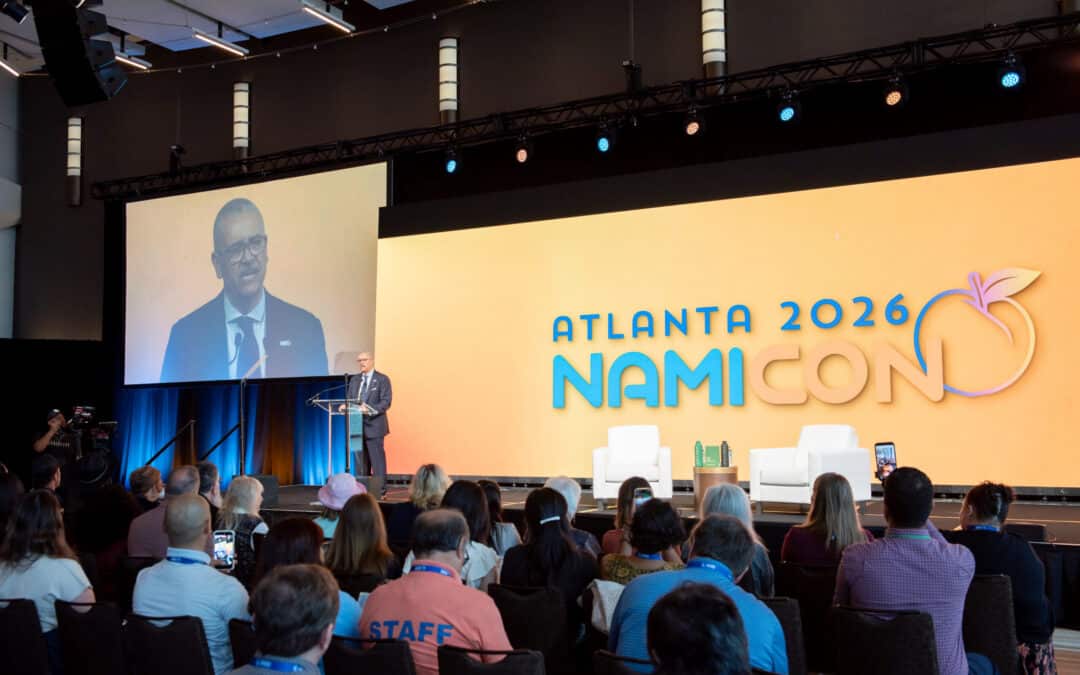
The National Center for Adoption Competent Mental Health Services joined thousands of mental health professionals, advocates, individuals with lived experience, family members, and community leaders at NAMICon 2026 in Atlanta, Georgia. As one of the nation’s largest gatherings focused on mental health awareness, education, and advocacy, NAMICon provides a valuable opportunity to engage in meaningful conversations about the future of mental health care and the importance of ensuring that children, youth, and families impacted by child welfare are not left out of those discussions.

Throughout the conference, one message was clear: mental health systems are evolving, but there remains a critical need for specialized knowledge, workforce development, and cross-system collaboration to meet the diverse needs of children and families impacted by child welfare, including adoption, foster care, and kinship care. For the National Center, NAMICon was an opportunity to elevate the importance of adoption and permanency-competent mental health services while connecting with professionals and organizations committed to improving outcomes across the behavioral health continuum.


Why Adoption Competence Matters in Mental Health Spaces

Children and families impacted by foster care, adoption, kinship care, guardianship, and other permanency experiences often navigate challenges that extend beyond traditional mental health concerns. Yet many mental health professionals receive little formal training on how these experiences affect assessment, diagnosis, treatment planning, and family engagement. As the National Center connected with attendees from across the country, many professionals shared that they frequently work with children and families who have experienced child welfare involvement but have had limited opportunities to receive specialized training in these areas.

These conversations reinforced the importance of building a workforce that understands the unique experiences of children and families impacted by child welfare and can provide services that are responsive, relationship-centered, and grounded in permanency.


Sharing Resources and Building New Partnerships

NAMICon brought together professionals from a wide range of sectors, including community mental health organizations, hospitals, advocacy groups, peer support organizations, educational institutions, state agencies, and private practice settings. Throughout the conference, the National Center connected with attendees from across the country who were eager to learn more about adoption competence, workforce development, and strategies to strengthen mental health services for vulnerable populations.
Many conversations focused on the growing need for practical tools and training that help professionals better understand the intersection of trauma, attachment, loss, and identity. Attendees also expressed interest in approaches that support collaboration between child welfare, behavioral health, education, and community-based organizations.

These discussions highlighted an encouraging trend: professionals increasingly recognize that improving mental health outcomes requires coordinated systems that work together to support children and families holistically.


Key Themes from NAMICon

Several themes emerged throughout the conference that closely align with the National Center’s work.

  • The Importance of Lived Experience: Across sessions and conversations, there was a strong emphasis on ensuring that individuals with lived experience are actively involved in shaping services, policies, and systems. This commitment mirrors the National Center’s belief that meaningful change happens when the voices of those directly impacted help guide decision-making and service delivery.
  • Workforce Development Remains a National Priority: Mental health workforce shortages continue to affect communities across the country. Professionals consistently highlighted the need for accessible, high-quality training opportunities that increase confidence, competency, and retention. Specialized training programs such as NTI and TAC can help address these needs while equipping professionals with skills that improve outcomes for children and families.
  • Collaboration Drives Better Outcomes: Another recurring theme was the need to break down silos across systems. Mental health, child welfare, education, health care, and community organizations all play critical roles in supporting children and families. Strong partnerships across these systems enable earlier intervention, more coordinated care, and improved long-term outcomes.


Looking Ahead

The National Center left NAMICon energized by the conversations, connections, and shared commitment to strengthening mental health services nationwide. The conference reinforced the growing recognition that children, youth, and families impacted by child welfare require services that acknowledge their experiences, honor their relationships, and support their lifelong well-being.

As the National Center continues its work with States, Tribes, territories, providers, and community partners, we remain committed to expanding access to adoption and permanency-competent mental health services through training, technical assistance, workforce development, and systems change.

The conversations at NAMICon served as a powerful reminder that when professionals come together to share knowledge, learn from lived experience, and build partnerships, meaningful progress is possible. We look forward to continuing these conversations and working alongside partners nationwide to ensure that every child and family has access to the support they need to thrive.

Stay Connected to Our Work in Action

Follow us for updates across states, tribes, and territories, plus conference highlights, training, resources, and insights on adoption competent mental health care

Building Access Through Partnership: Centene Invests in Illinois TAC Cohort for 2026

Building Access Through Partnership: Centene Invests in Illinois TAC Cohort for 2026

Building Access Through Partnership: Centene Invests in Illinois TAC Cohort for 2026


The National Center for Adoption Competent Mental Health Services is proud to partner with Centene to facilitate a Training for Adoption Competency (TAC) cohort in Illinois in 2026 which will launch in April 2026.  TAC is the nation’s premiere assessment-based certificate program for training mental health practitioners and developing adoption competency skills. Through classroom and remote instruction, as well as clinical case consultation, TAC students master key clinical skills that support adopted children and their foster, adoptive and kinship families.   

Centene Corp. LogoCentene’s investment in TAC is well-timed. The Center for Adoption Support and Education (C.A.S.E.) released two landmark research reports in December 2025 that provide the strongest evidence to date that adoption-competent mental health services deliver measurably better outcomes for adoptive families—and that far too few families can access them. 


“Birth parents, adoptive parents, adoptees, and kinship caregivers—engage in mental health services at rates 2.5 to 3 times higher than the general U.S. population.”


The new data, collected through a nationwide survey and a multi-state effectiveness study, show that families who engaged with TAC-trained clinicians—clinicians who have completed C.A.S.E.’s rigorous evidence-based, accredited Training for Adoption Competency (TAC) program—report stronger therapeutic alliances, higher satisfaction across all dimensions of treatment, more adoption-relevant care, and improved family outcomes. 

At the same time, the national survey reveals that families across the adoption kinship network—including birth parents, adoptive parents, adoptees, and kinship caregivers—engage in mental health services at rates 2.5 to 3 times higher than the general U.S. population, but face significant barriers to adoption-competent care. Just 21.84% of respondents rated their clinicians as adoption competent, with adoptees facing the steepest access challenges.


Adoption Competent Resources,
Right to Your Inbox

Join our email list and receive resources, learning opportunities, and up-to-date highlights of our work.

NTI Training: What I Learned Could Have Saved My Career in Counseling 

NTI Training: What I Learned Could Have Saved My Career in Counseling 

NTI Training: What I Learned Could Have Saved My Career in Counseling 

I knew from a very young age that I wanted to help people, and becoming a mental health counselor felt like the perfect way to do that. After graduating from college, I stepped eagerly into the field. I was wide-eyed, hopeful, and ready to make a difference. I believed my undergraduate and graduate coursework had prepared me for anything I might encounter. But very quickly, I lea ed that wasn’t true. 

Within my combined 180 credit hours of education, I spent roughly one hour lea ing about child welfare. Even then, that hour was focused on the history of the system, not how to effectively treat children, youth, and families touched by foster care, adoption, or kinship care. As a counselor who frequently worked with clients connected to the child welfare system, that single hour left me profoundly unprepared.  

Without that foundation, I often felt like I was guessing. I cared deeply about my clients, but I didn’t understand the complex layers of trauma, attachment disruptions, identity development, and relational loss inherent in their experiences. I didn’t know how these factors shaped their behaviors, their relationships, or their healing process. Over time, the weight of feeling ineffective, despite my best efforts, took a toll. 

After five years of wrestling with burnout, frustration, and self-doubt, I made a heartbreaking decision: I left the counseling field entirely. 

Discovering NTI 

I encountered the National Adoption Competency Mental Health Training Initiative (NTI) after joining the National Center. As I began working through the modules, I felt a mix of excitement and grief. The material was everything I had been missing as a counselor. It was comprehensive, practical, and deeply rooted in the lived realities of children and families with child welfare experience. I found myself thinking back to former clients. I visualized their faces, reflected on our sessions, and wondered how different things might have been if I’d had this training years earlier. For the first time, concepts that once felt confusing or out of reach became clear. 

As I moved through the training, one question kept echoing in my mind: “How much more effective could I have been if I’d known all of this?” And the honest answer is much more. 


What NTI Gives Professionals That Traditional Training Does Not 

NTI provides exactly what so many mental health providers never receive in school: adoption-competent, trauma-informed, child welfare-specific training. 

It covers topics such as: 

  •  Understanding trauma and attachment through a child-welfare lens 
  • Supporting identity formation and addressing grief, loss, and loyalty conflicts 
  • Strengthening caregiver capacity and therapeutic partnerships 
  • Navigating system dynamics with child welfare professionals 
  • Providing effective, culturally responsive, adoption-competent mental health care 

NTI training goes beyond just increasing knowledge; it can also build confidence, reduce bu out, and help providers show up for children and families in meaningful, practical ways. The National Center couples NTI training with coaching and lea ing communities to help professionals continue their growth and competency beyond the course.  

Every professional deserves access to training that prepares them for the realities of this work, and every child and family deserves a provider who understands their story, needs, and unique jou ey. 


Looking Back to Looking Forward 

If I had NTI earlier in my career, I might still be a counselor today. But I also know that my experience isn’t unique. Many professionals enter the field with passion and dedication, but lack the training needed to serve this population effectively. NTI fills that gap. It empowers the workforce and, most importantly, ensures children, youth, and families receive the adoption-competent mental health care they deserve. 

No counselor, social worker, or mental health provider should have to navigate this work feeling unprepared. NTI makes sure they don’t have to. 


Asia Huggins Content Specialist, National Center for Adoption Competent Mental Health Services


Adoption Competent Resources,
Right to Your Inbox

Join our email list and receive resources, learning opportunities, and up-to-date highlights of our work.

Utilizing NTI to Enhance the Adoption Competency of Parent Peer Support Specialists in Child Welfare 

Utilizing NTI to Enhance the Adoption Competency of Parent Peer Support Specialists in Child Welfare 

Meeting the Moment: Utilizing NTI to Enhance the Adoption Competency of Parent Peer Support Specialists in Child Welfare 

By the National Center’s Community Engagement Team (CET)

As families and caregivers face ongoing challenges within the child welfare system, one solution is quietly transforming outcomes and restoring hope—parent peer support. Facilitated by individuals with lived experience, peer support programs offer connection, guidance, and healing where traditional services often fall short. 

These programs—ranging from mentorship initiatives to support groups—are vital for families navigating child welfare. Yet access to peer support is increasingly limited due to funding constraints, staffing shortages, and time demands. Meanwhile, demand for peer support professionals continues to rise, even as direct services decline. As systems seek more sustainable, trauma-informed approaches, peer support is gaining recognition as a critical component of care. 

In both mental health and child welfare, parent peer support goes far beyond mentoring. It includes helping families navigate complex systems, attending court proceedings, assisting with insurance and service access, and advocating in school settings. To meet growing demand, parent peer support professionals need specialized training to effectively support families. The National Adoption Competency Mental Health Training Initiative (NTI) is the only nationally accredited training designed to enhance competencies for professionals in adoption, guardianship, and foster care—including those in peer support roles. 

NTI supports professionals working with families impacted by kinship placements, reunification, foster care, and adoption. Its core principles, understanding, connection, and healing, align closely with the foundation of peer support. Drawing from voices of lived experience, peer support professionals embody these values by fostering trust, guiding families, and promoting emotional resilience. Both NTI and peer support elevate the voices of those impacted by child welfare and emphasize compassionate, strengths-based care. 

At the heart of NTI is the recognition of the multifaceted mental health needs of children and families who have experienced child welfare. These needs are shaped by grief, loss, trauma, attachment disruptions, and struggles with identity. Peer support is uniquely positioned to address these needs by creating safe, empathetic spaces where lived experience can be shared without judgment. Mentors and group facilitators have lived experience themselves, allowing them to validate emotions and foster a sense of belonging—critical for those who may feel isolated or misunderstood. 

NTI emphasizes the importance of helping parents and guardians reframe children’s behaviors through a trauma-informed lens. In peer support groups, caregivers often explore how behaviors that may appear as defiance or dysfunction are, in fact, expressions of unmet needs, unresolved trauma, grief, or loss. Sometimes, these behaviors are misdiagnosed as mental healtlh conditions before proper assessment of the impact of earlier life experiences. Peer support professionals play a vital role in helping caregivers understand that challenging behaviors often reflect the emotional impact of a child’s involvement in the child welfare system. This shift in perspective encourages caregivers to respond with empathy and patience rather than labels in order to strengthen attachment, build trust, and foster healing. 

Adolescence is a pivotal time for identity formation, and youth peer support programs are especially impactful during this stage. These programs help young people integrate their stories, build confidence, and develop advocacy skills. Just as importantly, they help youth realize they are not alone. By connecting with peers who’ve faced similar challenges, young people find validation, community, and hope. 

Given the importance of peer support and its alignment with NTI principles, it is essential to equip peer support professionals with the training, resources, tools, and encouragement they need to sustain their work and prevent bu out. As demand continues to outpace workforce capacity, strategies to retain and uplift these professionals are more critical than ever.   

Looking for Additional Resources?

Visit the Knowledge Hub to access models of intervention, training resources, and practical tools to strengthen cross-system collaboration and improve outcomes for children, youth, and families. 

Webinar: Helping Mental Health Providers Achieve Outcomes that Matter Most

Webinar: Helping Mental Health Providers Achieve Outcomes that Matter Most

WEBINAR:

Helping Mental Health Providers Achieve Outcomes that Matter Most

Join us for a deep dive into what youth and families truly want from behavioral health services and how the National Center is helping providers meet those expectations.

Grounded in findings from national focus groups led by FREDLA and other family-run organizations, this session explores real-world outcomes that matter most to youth and caregivers: respect, cultural responsiveness, individualized care, accessible services, and meaningful collaboration.

Learn how adoption competent, family-informed approaches can drive better care experiences and outcomes across mental health and child welfare services.

Watch the Webinar:
Helping Mental Health Providers Achieve Outcomes that Matter Most


Presenters:

Millie Sweeney
Milley Sweeney

Director of Learning and Workforce Development, FREDLA

Millie Sweeney
Stacy Morgan
Executive Director, Mental Health Transformation Alliance

Looking for Additional Resources?

Visit the Knowledge Hub to access models of intervention, training resources, and practical tools to strengthen cross-system collaboration and improve outcomes for children, youth, and families. 

Healing in a Social Context: Why Connection Matters

Healing in a Social Context: Why Connection Matters


Healing in a Social Context: Why Connection Matters

 Healing is often perceived as a personal journey, something we undertake alone, within ourselves. While this perspective holds some truth, healing is profoundly influenced by those around us. As social beings, humans rely on others from birth for survival, comfort, and growth. Healthy, supportive relationships provide safety, love, and understanding — crucial elements for healing. In this blog post, I’ll share insights from my perspective as a therapist, emphasizing that this knowledge is relevant to everyone. We all contribute to the healing environment. 

Children involved in child welfare often experience developmental trauma, shaped by separation and loss. Adoption-competent mental health services prioritize attachment and facilitate healing within the family context. These services address emotional, relational, and psychological challenges unique to child welfare involvement, rooted in attachment, trauma, identity, and grief.  As a clinical social worker, I view the world through a ‘person-in-environment’ lens, recognizing social environments as integral. People influence our identities at various life stages, and adults — whether personally or professionally involved with children, like myself as a therapist — play a vital role in a child’s healing journey after adversity. In social work, we affirm that it takes a village to raise a child and to care for that village. We rely on each other not just to survive but to thrive. 

The idea for the blog title, “Healing in a Social Context,” was inspired by a talk I attended at the American Psychological Association Conference a few years ago, delivered by Bruce Wampold. His presentation, “Healing in a Social Context: The Importance of Clinician/Patient Relationship,” delved into what are often referred to as the “common factors” of therapy. These factors include elements like empathy and the quality of the therapist-client relationship. When you take a broader view, these elements are deeply embedded in the social fabric of our lives. I encourage you to watch his talk [here], where he shares vivid examples of social-contextual healing. I’ll share one of those examples below. 

Bruce described a phenomenon in honeybees called “social fever.” When an infection arises in the colony, the bees work together by fanning their wings to raise the hive’s temperature, effectively eliminating heat-sensitive pathogens. By acting collectively to help the sick members of the hive, they also protect the entire colony from the spread of infection.  A more familiar example of social healing in the human world is the placebo effect. This occurs when your brain is convinced that a “fake” treatment, like a sugar pill, is real. What’s fascinating is that healing is often triggered by the warmth and empathy conveyed by the person administering the sugar pill, not the pill itself. (That said, don’t go handing out sugar pills to promote healing!) 

So, what does this mean for mental health? One important takeaway is that while we have evidence-based mental health interventions that can significantly help children and their families, the success of these interventions depends on the people delivering them. Positive relationships amplify the effectiveness of these treatments. Relationships “bring the medicine,” help the medicine work better, and, in some cases, are the medicine.  As professional helpers, we become part of a person’s social context. We represent broader social systems and can offer a sense of belonging to those we support. Adoption-competent professionals, for example, understand that healing from early attachment disruptions happens through trust and consistency. Mental health and child welfare professionals have a unique role in fostering healing social environments that support long-term growth and recovery.   

Here Are a Few Ways to Help: 

  • Build Trust: Create safe spaces where clients feel heard and respected. Trust is the foundation of any healing relationship, and it grows when we consistently show up and follow through. 
  • Encourage Connection: Support clients in building or rebuilding healthy relationships. This might involve connecting children with mentors or helping adults strengthen family ties. Remember, clients live in the world—not just within the walls of our therapy offices. 
  • Model Healthy Interpersonal Relationships: Demonstrate what respectful, supportive communication looks like. This is especially impactful for individuals who have experienced unhealthy or harmful relationships. Strong relationships aren’t all rainbows; they’re about trusting each other, engaging in courageous conversations, and repairing when disagreements arise. 
  • Promote Secure Attachment Between Children and Their Parents: Address attachment disruptions through approaches such as Emotionally Focused Therapy, Theraplay, and Dyadic Developmental Psychotherapy. 
  • Help Parents Develop Co-Regulation Strategies: Equip parents with tools to enhance their child’s sense of safety. This could include validating the child’s feelings, providing opportunities for control, practicing calming strategies, and incorporating sensory breaks into daily routines.


If you’re reading this and don’t see yourself as a “professional helper,” know that you are a helper. You can play a meaningful role in someone’s healing journey. Be present. Listen without judgment. Show up. Fan your wings. And then show up again and again. Be part of the environment that fosters healing.   


Looking for Additional Resources?

Visit the Knowledge Hub to access models of intervention, training resources, and practical tools to strengthen cross-system collaboration and improve outcomes for children, youth, and families.