
How Adoption Competency Supports Young People: Alex’s Perspective 

How Adoption Competency Supports Young People: Alex’s Perspective 

How Adoption Competency Supports Young People: Alex’s Perspective 

Adoption is often celebrated as a new beginning, but for many youth, it’s a complex jou ey filled with layered emotions and experiences. Part of the process is working with providers who understand adoption competency. Adoption competency refers to the skills, knowledge, and understanding that professionals—like social workers, therapists, and educators—need to effectively support children who are adopted or in foster care, as well as their families.    

The Importance of Permanency and Respect 

Alex Oleson, a Lived Experience Leader, was adopted into a multi-racial family and has navigated this jou ey. In his experience, he lea ed a great deal about the importance of adoption competency—both for adoptive parents and for the youth themselves.    Alex shares, “I am a 22-year-old Black man adopted into a multi-racial family including white, Hispanic, Black, and American Indian siblings. My family has taught me the importance of permanency and to respect and love others that don’t look like me.”    Growing up in a diverse family has not only enriched Alex’s life but has also instilled a strong sense of identity. Permanency is crucial for any child, especially those who have experienced instability in foster care. It’s not just about having a roof over your head; it’s about having a consistent environment where love and respect flourish. This foundational support allowed Alex to thrive, encouraging him to embrace his individuality while also appreciating the diverse backgrounds of his siblings.   

Misconceptions About Adoption 

Alex explains “oftentimes going into foster care there is a misconception that a youth starts a new life with a new family…”    This idea that adoption equates to a fresh start can be misleading. While it is a new chapter, it often comes with the weight of unresolved feelings about one’s birth family and past experiences. The phrase “adoption means starting a new life” can be misleading because it oversimplifies the complex emotional jou ey that adopted children and their families experience.     While adoption certainly offers the opportunity for a fresh beginning and a loving home, it often comes with the weight of past trauma, loss, and identity struggles. Many adopted children carry memories or feelings about their biological families, which can impact their sense of belonging and self-worth. Additionally, the transition to a new family can be filled with challenges, as children may need time to adjust, build trust, and navigate their emotions. Instead of a clean slate, adoption is more about integrating past experiences into a new narrative, emphasizing the need for understanding, patience, and ongoing support as families work together to heal and grow.   

Supporting Identity and Connections 

Alex recommends “enacting strategies young people have identified such as identity training…”    Identity training focuses on helping individuals, particularly youth, understand and explore their personal identity, including aspects like culture, ethnicity, gender, and life experiences. Identity is a critical aspect of any young person’s development, especially for those in the adoption constellation. Adoptive families should prioritize understanding the unique cultural and emotional backgrounds of their children. By doing so, they empower youth to explore and express who they are while acknowledging their past.    Additionally, Alex shares “I would encourage all adoptive or resource parents to support any young person they adopt in feeling confident in themselves…”    Maintaining connections with birth families can significantly contribute to emotional stability. For many young people, these relationships are lifelines, providing a sense of belonging and continuity. It’s essential for adoptive families to facilitate and encourage these connections, allowing youth to engage with their kin and preserve their history.   

Cultivating Emotional Stability 

While some may believe that it’s better for a youth to have a fresh start without contact with their birth families—thinking that biological relatives might sabotage the adoption or that staying connected could be too painful—fostering an environment that values permanency, supports identity exploration, and encourages connections with birth families can truly make a difference in the field of mental health. This perspective overlooks the potential for healing and understanding that can come from maintaining those connections.     For many adopted youth, knowing their roots and having access to their biological families can provide a sense of belonging and help them navigate their identities, ultimately supporting their emotional well-being and resilience. Alex shares, “existing relationships with kin are incredibly important for young people’s emotional stability when being adopted. As I reflect on my own jou ey, the support I received from my adoptive family in maintaining ties with my birth family has been invaluable. These relationships can serve as a source of comfort and identity, reinforcing the idea that one’s past does not need to be erased but can be integrated into a new narrative.”    Adoption competency is more than just a concept; it’s a commitment to understanding the multifaceted experiences of youth in the system. By creating a nurturing environment that prioritizes permanency, supports identity exploration, and fosters connections with birth families, adoptive parents can significantly impact the field of mental health. Ultimately, it’s about equipping young people with the confidence to embrace who they are while navigating their unique jou eys. In this way, we can transform adoption into a powerful story of resilience, connection, and love.    

Looking for Additional Resources?

Visit the Knowledge Hub to access models of intervention, training resources, and practical tools to strengthen cross-system collaboration and improve outcomes for children, youth, and families. 

This Week in the News 10/28-11/1

This Week in the News 10/28-11/1


This Week in the News 10/28-11/1

Written by Erin Bader  

It’s been a busy week in the news for children’s mental health. These articles examine the ongoing mental health needs and various efforts to address them in some States.    

A Growing Crisis in Mental Health Care for Ohio Children   Across Ohio, children with complex behavioral needs are facing severe challenges as placement options dwindle and the demand for specialized care reaches record levels. Lindsay Sparks, from South Central Ohio Job and Family Services, explained that despite collaboration with mental health providers, many agencies lack the resources to manage extreme cases. She recounted the difficulty of placing a young child who had been denied placement 45 times statewide, forcing children to occasionally spend nights at agency facilities.  Additionally, escalating mental health issues among children are straining the system. Jody Walker, executive director of the agency, noted that severe behavioral cases have surged over the past decade, and the cost of suitable placements has increased by 300%.In response to these challenges, the County Commissioners Association has prioritized child welfare in the upcoming biennial budget. The association supports Gove or Mike DeWine’s commitment to children and emphasizes the critical role counties play in protecting them.   

County receives millions in state funds for foster youth with behavioral conditions  Stanislaus County, CA has approved an $8.5 million grant to create programs for foster youth with serious behavioral health conditions. The grant, funded by the Califo ia Department of Social Services, will support the Children’s Crisis Continuum Pilot Program and be administered by Stanislaus County’s Behavioral Health and Recovery Services on behalf of the Central Valley Consortium (CVC), which includes Stanislaus, Merced, and San Joaquin counties.  Since 2020, the CVC has worked to develop strategies for supporting foster youth with complex behavioral needs. Aspiranet, a community-based organization, has been instrumental in these efforts, previously securing over $33 million in state funds to expand services. The Hope Forward Campus in south Turlock will be upgraded to include new facilities for psychiatric, vocational, and recreational services.  Key unmet needs in the region include a lack of local crisis care, insufficient placement options, limited after-care coordination, and a shortage of trained resources for complex cases.    

For kids in mental health crisis, there’s now urgent care   This 11-minute interview introduces a new psychiatric urgent care clinic for kids and teens that has opened at the Seattle Children’s Hospital. The clinic will be the first of its kind in Washington. It’s intended for children who don’t need emergency services but do need same-day care.      ‘Numerous’ complaints of Kentucky foster youth sleeping in office buildings spark investigation  Kentucky is investigating the root causes of reports of foster children sleeping in office buildings without proper supervision. The Cabinet for Health and Family Services (CHFS) has acknowledged the challenges of placing high-needs youth—often older teenagers with severe behavioral or mental health issues—into suitable environments, despite efforts to increase funding for temporary care options.  Terry Brooks, executive director of Kentucky Youth Advocates, emphasized that addressing the issue requires significant investment and creativity. The state must provide more resources and higher compensation for those willing to care for high-needs children. He suggested potential solutions, such as incentivizing foster care placements and establishing triage centers as temporary, secure housing options. Brooks highlighted that the problem is widespread across Kentucky, not limited to Jefferson County, and underscored the need for legislative action and increased funding.   

$25M Grant To Bolster Mental Health, Wellness Resources At PGCPS   Prince George’s County Public Schools (PGCPS) is expanding its behavioral health services by partnering with multiple organizations to address gaps in student mental health care. These partners will complement the work of school counselors, psychologists, social workers, and clinicians with a focus on crisis intervention, wellness education, and professional care access. The organizations will each provide a service including virtual health support, mobile response teams, mental health education and social-emotional lea ing, mental health first aid training, and support groups.    

Experts discuss Oklahoma’s mental illness, substance abuse crises  Oklahoma is actively addressing the mental health crisis, including participating in the National Center’s Intensive Technical Assistance. At the “State of Mental Health” event hosted by the Healthy Minds Policy Initiative, mental health experts discussed strategies for addressing Oklahoma’s ongoing mental health and substance abuse challenges. Key solutions include expanding the mental health workforce, prioritizing youth mental health care, and making services more affordable and accessible. Oklahoma is taking proactive measures, such as funding the 988 mental health hotlines.   Oklahoma First Lady Sarah Stitt highlighted the cultural shift towards more open conversations about mental health, stressing the importance of prioritizing support and breaking cycles of struggle. The event underscored the widespread impact of mental health issues on everyday life, affecting teachers, law enforcement, and healthcare professionals alike, and called for continued, community-wide action.    

Adoption Competent Resources,
Right to Your Inbox

Join our email list and receive resources, learning opportunities, and up-to-date highlights of our work.

This Week in the News 9/30-10/4

This Week in the News 9/30-10/4


This Week in the News 9/30 – 10/4

This month, the National Center is highlighting ways to improve access to child welfare competent mental health services across States, Tribal Nations, and territories. Our Intensive Technical Assistance services are designed to support these efforts by offering tailored solutions that address the complexities of these systems. In this week’s news, we’ve gathered key examples of how both State and Federal agencies are leading the way in improving access to these critical services. These stories underscore the multi-faceted strategies required to ensure children and families receive the care they need.   

AAP applauds new CMS guidance to improve comprehensive health care for children in Medicaid, CHIP | AAP News | American Academy of Pediatrics  The Centers for Medicare & Medicaid Services (CMS) has issued new guidance aimed at improving pediatric care, with a particular focus on children with specialized needs such as those with mental health conditions, in foster care, or with disabilities and complex health needs. The guidance outlines key components of a high-functioning care system, including a single point of entry, integrating support for mild to moderate needs within primary care, and ensuring access to a broad range of community-based specialty care. It also emphasizes limiting inpatient mental health treatment to situations where it’s medically necessary. To strengthen the pediatric workforce, CMS recommends strategies like improving compensation to attract providers, expanding provider qualifications, utilizing telehealth, using interprofessional consultations to access specialty providers, and reducing administrative barriers like prior authorizations.   

How WA is trying to get kids in mental crisis out of hospitals | The Seattle Times  The Seattle Times Mental Health Project is investigating the day and week-long waiting periods children face for vital psychiatric care. This article speaks with Taku Mineshita, a recent hire to a new position that will oversee the agencies responsible for care for children. Mineshita plans to employ cross-system collaboration to simplify the process of accessing services for families and addressing children’s needs before they reach a crisis point.    

State Agencies Announce Effort to Support Children with High Acuity Needs  The Indiana Gove or has created a Children with High Acuity Needs Project which brings together The Family and Social Services Administration the Department of Correction, the Department of Child Services, and the Department of Education to provide more support to children with high acuity mental and behavioral health needs and keep youth in crisis in the least restrictive setting possible. The four goals of the project are: 

  • Cross-agency navigators: These will help coordinate care across various services, including education, mental health, child welfare, and juvenile justice, using schools as a hub to prevent institutionalization and help children transition back home from residential settings. 
  • Support for foster parents and kinship caregivers: Caregivers will receive extra support for caring for children with high needs, including access to respite care. 
  • Gatekeeper process review: A system to ensure children in the state’s psychiatric hospital network remain in the least restrictive setting and can leave as soon as they are ready, preventing unnecessary extended stays. 
  • Youth transitional homes and caregiver coaching: Transitional homes will offer short-term support for children leaving residential care to help them reintegrate into their communities, while families receive caregiver coaching to assist with the transition. These homes are designed for short-term use, unlike traditional group homes. 

  Intensive kids’ mental health treatment program opens north of Salem – Salem Reporter  The Meadowlark Program in Salem Oregon was created to meet students’ mental health needs and ensure that they do not fall behind in their education so that they can retu to their home school.     

Study reveals impact of adverse childhood experiences on teen mental health (news-medical.net)  Another step to improving access to mental health services is to have a better understanding of risk factors so services can be implemented to support children and families earlier.  A 15-year University of Michigan study reveals that teens who faced high emotional and multidimensional adversity early in life are at the greatest risk for mental health challenges. Tracking over 4,000 youths from birth to age 15, the study explored how adversities such as maltreatment, family violence, and maternal depression impact mental health and brain function. Key findings include: 

  • Teens exposed to high adversity across multiple contexts (home, family, neighborhood) show worse mental health outcomes and differences in brain activity related to emotion processing. 
  • Maternal depression alone can lead to significant negative effects, even when other adversities are moderate.
Elevating Youth Voices in Trauma-Informed Care

Elevating Youth Voices in Trauma-Informed Care


Youth Voices in Trauma-Informed Care

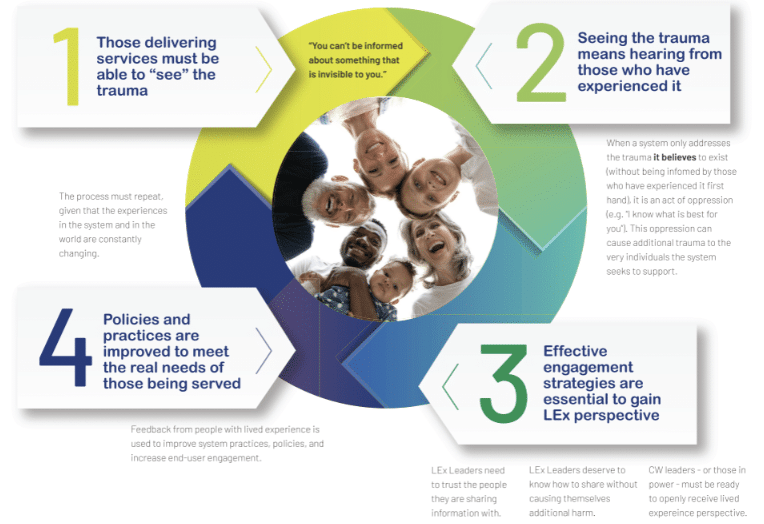
The National Center prioritizes the inclusion of lived experience voices in everything that we do. In order to improve mental health services for children and youth, we must all listen to and lea from those who have experienced child welfare and mental health systems. Binley Taylor worked with Faith Sharp, a LEx Leader, to write this post.   To be truly trauma-informed, it is crucial for those delivering services to recognize and understand the trauma experienced by those they serve. This understanding is only possible by listening to the voices of people with lived experience (LEx). Seeing the trauma means hearing directly from those who have lived through it.  

Faith Sharp, an individual with lived experience in foster care, highlights what makes someone with such a background a good leader. She emphasizes the importance of being flexible, working towards goals, and keeping track of one’s ideas. Faith feels empowered when adult stakeholders listen to her ideas and experiences. She believes that often her insights offer a unique perspective that others may not have considered, and it’s rewarding when her experience can blend into the work. As she continues to grow as a professional, she hopes to be heard not just as someone with lived experience but also as an expert in the workforce.  

For LEx leaders to be willing to share their trauma, three key conditions must be met:   Trust: LEx individuals need to trust the people they are sharing information with. Safety: They deserve to know how to share without causing themselves additional harm. Readiness: Child welfare leaders, or those in power, must be ready to receive this information, embracing power-sharing and other LEx engagement strategies.   Faith shares that in her current work, she is part of changing the foster care system in small ways every day. Sharing her story is a significant part of this work. She advises adult stakeholders to avoid calling out youth in meetings but instead to create spaces for them to provide feedback. “Every room is a space for lived experience voice if you have a desire to include it,” she says. Tokenistically including LEx voices without genuine engagement contradicts the essence of meaningful inclusion.   Effective engagement strategies are essential for meaningful participation.

Here are some key strategies to ensure effective engagement of LEx leaders :   Create Safe Spaces: Ensure environments are supportive and non-judgmental. Provide Training: Equip LEx leaders with skills and knowledge. Offer Compensation: Recognize their contributions with fair compensation. Youth/Adult Partnerships: Encourage partnerships between LEx leaders and professionals. Continuously Seek Feedback: Use feedback to improve engagement and system practices.   Policies and practices need to be improved to meet the needs of those served. This means adopting trauma-informed practices that truly understand and address the experiences of LEx individuals. By listening to and incorporating the voices of LEx leaders, the foster care system can make significant strides toward better outcomes for all.   Faith’s jou ey and insights remind us that the inclusion of lived experience voices should be genuine and integrated into every aspect of the system. This approach not only enriches the work being done but also empowers those with lived experience to lead and innovate within the system.  

Child-Parent Therapy Has Biological Benefits for Traumatized Kids 

Child-Parent Therapy Has Biological Benefits for Traumatized Kids 


Child-Parent Therapy Has Biological Benefits for Traumatized Kids 

Written by Erin Bader  

A recent University of California-San Francisco study finds that Child-Parent Psychotherapy may slow down biological aging and prevent serious disease in children who have experienced trauma.     According to ACES research, traumatic experiences can have lasting effects on health and well-being in childhood and well into adulthood. The 45 children who received therapy as part of the UCSF study had less age acceleration than the 110 who didn’t. “These findings bolster the case for making sure families who experience trauma and stress can access child-parent therapies, in order to improve mental and physical health,” said Bush, the Lisa and John Pritzker Distinguished Professor of Developmental and Behavioral Health.   

This study helps to support the case for adoption competent mental health services for children with child welfare experience. Adoption competent mental health professionals understand that family-based, attachment-focused approaches are necessary in addressing the critical issues of trauma and attachment. They also acknowledge the vital role of parents in facilitating the child’s healing and supporting them by strengthening their capacity for therapeutic parenting and for communicative openness related to adoption.

To learn more about adoption competence and the National Center for Adoption Competent Mental Health Services, visit our website   

Mental Health Reimagined: A Summit on Youth Well-Being 

Mental Health Reimagined: A Summit on Youth Well-Being 


Mental Health Reimagined: A Summit on Youth Well-Being  

Written by Binley Taylor   FosterClub, in partnership with the Oregon Department of Human Services (ODHS), recently held a mental health and wellness summit for young people in and from Oregon’s foster care system and the adults who support them daily in Gladstone, Oregon. CASA workers, independent living providers, foster/resource parents, caseworkers and other professionals attended the event to lea about the impact of wellness on mental health. The event featured a diverse array of wellness activities, highlighting how different practices can enhance mental well—being.   From yoga and gym workouts to forest therapy, art, music, and creative writing workshops, the summit created a truly holistic environment. It highlighted the importance of integrating these practices into our mental health care routines.  

A Holistic Approach to Mental Health

The summit demonstrated how various wellness practices can work together to support mental health. Attendees had the chance to experience the stress-reducing effects of yoga, the mood-boosting power of exercise, and the calming influence of nature through forest therapy.   Art, music, and creative writing workshops added a layer of self-expression and emotional exploration. The summit showed that by combining these diverse elements, we can create a comprehensive approach to nurturing our mental well-being.  

Key Takeaways from the Summit

    t
  1. Community Matters. The summit brought together people from all walks of life, highlighting the power of community in mental health. Engaging in group activities fostered a sense of belonging and mutual support.
  2. t
  3. Integration is Key. The summit proved that incorporating wellness activities into mental health care can lead to significant improvements in overall well-being. It’s not about choosing just one practice, but rather finding a balance that works for the individual.
  4. t
  5. Wellness is for Everyone. The summit showed that wellness practices are accessible and beneficial for all, regardless of age or background. It’s about finding what resonates with you and making it a part of your life.
 

Informing the Work of the National Center

The insights gained from the summit support the goals and objectives of the Center. By integrating wellness practices into its training and support programs, the Center has the ability to affect how mental health services can affect youth, families, and the system as a whole.   The Center can draw on the summit’s success to develop holistic programs, offer evidence-informed training, and foster community and peer support networks. By doing so, the Center, in partnership with selected sites, will build stronger, more resilient mental health systems that truly meet the needs of those they serve.   Additionally, the Center’s commitment to providing equitable mental health services around adoption competencies is crucial. By engaging youth and families directly, the Center ensures that their voices and experiences shape the development and implementation of these services. This approach not only promotes equity but also enhances the effectiveness of mental health interventions by tailoring them to the unique needs of those who have directly experienced the system.  

Conclusion

The Mental Health Reimagined summit was a powerful testament to the transformative potential of wellness in mental health. It showed us that by embracing a holistic approach, we can contribute to a brighter, healthier future for ourselves and the communities we serve.   As the Center moves forward with its work, inspiration can be pulled from this event or others that are similar. By integrating wellness practices and building bridges between systems of care, the Center has the opportunity to make a profound difference in the lives of countless youth and families across the country. The Center’s focus, providing technical assistance to states, ensures that these holistic and equitable mental health services are accessible and impactful. Engaging youth and families in this process guarantees that the support provided is both relevant and effective, fostering a stronger, more supportive environment for all.