by Alisa Greenwood | Aug 16, 2024 | Adoption Competent Services>Trauma-Informed Care, For Professionals, Foster Care, Lived Experience
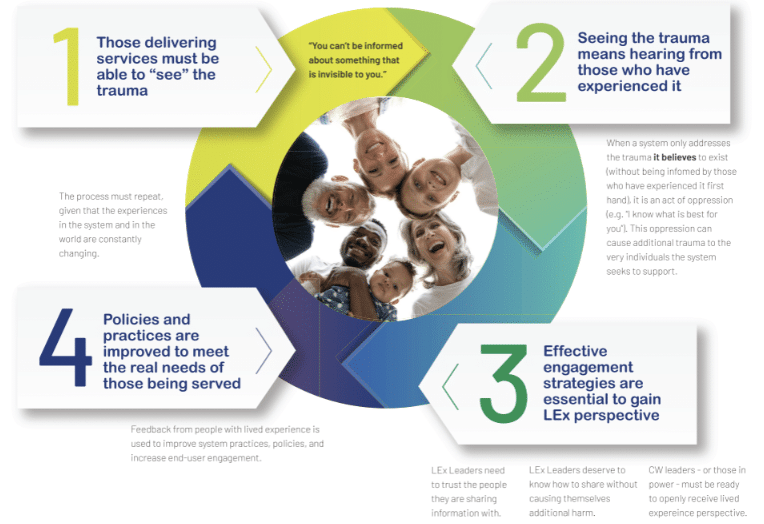
The National Center prioritizes the inclusion of lived experience voices in everything that we do. In order to improve mental health services for children and youth, we must all listen to and lea from those who have experienced child welfare and mental health systems. Binley Taylor worked with Faith Sharp, a LEx Leader, to write this post. To be truly trauma-informed, it is crucial for those delivering services to recognize and understand the trauma experienced by those they serve. This understanding is only possible by listening to the voices of people with lived experience (LEx). Seeing the trauma means hearing directly from those who have lived through it.
Faith Sharp, an individual with lived experience in foster care, highlights what makes someone with such a background a good leader. She emphasizes the importance of being flexible, working towards goals, and keeping track of one’s ideas. Faith feels empowered when adult stakeholders listen to her ideas and experiences. She believes that often her insights offer a unique perspective that others may not have considered, and it’s rewarding when her experience can blend into the work. As she continues to grow as a professional, she hopes to be heard not just as someone with lived experience but also as an expert in the workforce.
For LEx leaders to be willing to share their trauma, three key conditions must be met: Trust: LEx individuals need to trust the people they are sharing information with. Safety: They deserve to know how to share without causing themselves additional harm. Readiness: Child welfare leaders, or those in power, must be ready to receive this information, embracing power-sharing and other LEx engagement strategies. Faith shares that in her current work, she is part of changing the foster care system in small ways every day. Sharing her story is a significant part of this work. She advises adult stakeholders to avoid calling out youth in meetings but instead to create spaces for them to provide feedback. “Every room is a space for lived experience voice if you have a desire to include it,” she says. Tokenistically including LEx voices without genuine engagement contradicts the essence of meaningful inclusion. Effective engagement strategies are essential for meaningful participation.
Here are some key strategies to ensure effective engagement of LEx leaders : Create Safe Spaces: Ensure environments are supportive and non-judgmental. Provide Training: Equip LEx leaders with skills and knowledge. Offer Compensation: Recognize their contributions with fair compensation. Youth/Adult Partnerships: Encourage partnerships between LEx leaders and professionals. Continuously Seek Feedback: Use feedback to improve engagement and system practices. Policies and practices need to be improved to meet the needs of those served. This means adopting trauma-informed practices that truly understand and address the experiences of LEx individuals. By listening to and incorporating the voices of LEx leaders, the foster care system can make significant strides toward better outcomes for all. Faith’s jou ey and insights remind us that the inclusion of lived experience voices should be genuine and integrated into every aspect of the system. This approach not only enriches the work being done but also empowers those with lived experience to lead and innovate within the system.

by Alisa Greenwood | Aug 16, 2024 | Adoption Competent Services, For Professionals, Foster Care, Mental Health>self-care
As we dive into trauma-informed care this month at the National Center, we’re highlighting the importance of self-care in navigating and healing from past experiences. While self-care is vital for everyone, it can be an especially useful practice for those who have experienced trauma. At the National Center, we’re working to improve access to mental health services for children and families who have experienced the child welfare system. Self-care is an important piece of the mental health picture, and it can look different for everyone. We reached out to representatives from various groups in the mental health and child welfare systems to lea what self-care looks like for them.
Youth and young adults in child welfare
Victor Sim is a Lived Experience Leader with FosterClub, a National Center partner. As a guest on the Family Voices United podcast, he spoke about practicing self-care during a crisis. “I think it’s a huge struggle for a lot of people…you know we got a lot of people who are just dealing with that (recent events).” Victor recalls taking time for his mental health as a child in foster care. “I used to be really good at ‘slow down time’… I would listen to music in the moring and at night to slow myself down.” When asked about the advice he gives to others, he reminds listeners that, “It’s okay to know you’re not okay.”
Mental health workers
When we talk about mental health, it’s important to remember practitioners are people, too. They experience the effects of daily stressors and traumas like the rest of us. In fact, the demand for mental health services has increased dramatically since 2020. In a 2022 survey, 46% of mental health workers reported not being able to meet the demands of their increased workloads. Nearly half of the practitioners surveyed reported feeling bu ed out in 2022.  We asked Regi Corbi, a therapist at the Center for Adoption Support and Education (C.A.S.E.), how he practices self-care as a mental health worker in the years in the years since the Pandemic. “Some of my favorite ways to practice self-care as a therapist are physical exercise, yoga, or anything that can get my body moving.” Aside from exercise, Regi also gleans energy from art and community. “Listening to music, walking with my dog, and spending quality time with family and friends are the main ways I like to recharge, as well as getting a massage every now and then.”
Child Welfare Professionals
Similar to mental health workers, increased workloads, rising demands, and burnout are all too familiar to child welfare professionals. Erin Bader, Director of Knowledge and Dissemination at the National Center and former child welfare worker takes self-care seriously as she balances her life and passion for her work.  “Self-care is a necessity as a child welfare professional. I spend time with my husband, pup, family, and friends and always feel better.” It can be tough to find a balance between work and life, but Erin knows the importance of taking time to rest and unwind. “Work-life balance is a practice/way of life for me and allows me time to recharge my batteries so I can show up as my best self at work. This work matters too much for me not to be on my A-game. I also think that as helpers, it’s important for us to seek help too–therapy, journaling, support from loved ones.”
Families/Caregivers
 For families and caregivers in child welfare, practicing self-care can help to restore the energy needed to support those in need. Arnie Eby, foster and adoptive parent and Executive Director of the National Foster Parent Association (NFPA), a National Center partner organization, likes to take a moment each morning to look out the window and center his energy on something outside. “Focus time,” is Arnie’s way of tuning out the noise in life and grounding himself in the present moment. While these are all great examples of personal wellness, self-care is not one-size-fits-all, and it can look different for everyone. The important thing is to find out what works for you! How do you practice self-care?
For more information on trauma-informed care, check out some of these resources in our Knowledge Hub: Understanding Trauma-Informed Care to Build Parent Resilience Trauma Informed Parenting-Sequential Engagement Lived Experience (LEx) Leadership: Critical to Being Trauma Informed

by Alisa Greenwood | Jul 16, 2024 | Adoption Competent Services, Birth Family, Child Welfare Competent MH
Intersectional Grief: Adoption, Race, and Finding Healing
Written by Tony Hines, Training Specialist at The Center for Adoption Support and Education (C.A.S.E.) 
I am the Black adoptee of White adoptive parents. When my adoptive mother died of cancer when I was 12, I was sent to a therapist. I remember sitting in her chair week after week, not able to connect. Race was not talked about. Nor was adoption. Or how I felt about losing my adoptive mother after being separated from my birth mother. Intersectional was a word I did not understand at the time, and yet the meaning of that word (the intertwining of my experiences) already held an incredible amount of weight in my life. Perhaps that is why I was uncomfortable talking about my struggles with my therapist and with my adoptive family. The complicated relationships I had with my birth family made it hard to talk about my struggles with depression during this time with them as well. I knew that no one in my environment understood exactly what I was going through, which made me feel isolated. I handled things the way men, and Black men, are frequently conditioned to handle depressing circumstances—alone. I wish I had a professional to speak to at that time in my life who could have told me that it was alright to feel sad about being adopted and that it was alright to feel angry about losing my adoptive mother. Adoptees hold the grief of being separated from their birth families. Black people hold the generational grief tied to racism both past and present. I was holding, and still hold, both of those forms of grief. However, in adulthood, I know that I am not alone in bearing the weight of those collective forms of grief and that there are others I can talk to about my experience. Therapists who understand how these intersectional themes have impacted my life have been helpful, as have peer relationships with other Black male interracial adoptees. As Black people and Black men, sometimes we have been taught to be “strong” in the face of adversity. Our grandparents and great-grandparents are shown in our history books with faces of steel as White faces shout at them. Survival, and racial progress, relied on that type of strength from our parents. What was important for me to learn, was that being strong as a Black man also meant processing how I was feeling about my mental health. In doing so, I would be better equipped to find belonging in my life and to help other Black adoptees from families like mine.

by Alisa Greenwood | May 30, 2024 | Adoption Competent Services>Trauma-Informed Care, Child Welfare Competent MH, Lived Experience

Mental Health Reimagined: A Summit on Youth Well-Being
Written by Binley Taylor
FosterClub, in partnership with the Oregon Department of Human Services (ODHS), recently held a mental health and wellness summit for young people in and from Oregon’s foster care system and the adults who support them daily in Gladstone, Oregon. CASA workers, independent living providers, foster/resource parents, caseworkers and other professionals attended the event to lea
about the impact of wellness on mental health. The event featured a diverse array of wellness activities, highlighting how different practices can enhance mental well—being.
From yoga and gym workouts to forest therapy, art, music, and creative writing workshops, the summit created a truly holistic environment. It highlighted the importance of integrating these practices into our mental health care routines.
A Holistic Approach to Mental Health
The summit demonstrated how various wellness practices can work together to support mental health. Attendees had the chance to experience the stress-reducing effects of yoga, the mood-boosting power of exercise, and the calming influence of nature through forest therapy.
Art, music, and creative writing workshops added a layer of self-expression and emotional exploration. The summit showed that by combining these diverse elements, we can create a comprehensive approach to nurturing our mental well-being.
Key Takeaways from the Summit
t- Community Matters. The summit brought together people from all walks of life, highlighting the power of community in mental health. Engaging in group activities fostered a sense of belonging and mutual support.
t- Integration is Key. The summit proved that incorporating wellness activities into mental health care can lead to significant improvements in overall well-being. It’s not about choosing just one practice, but rather finding a balance that works for the individual.
t- Wellness is for Everyone. The summit showed that wellness practices are accessible and beneficial for all, regardless of age or background. It’s about finding what resonates with you and making it a part of your life.
Informing the Work of the National Center
The insights gained from the summit support the goals and objectives of the Center. By integrating wellness practices into its training and support programs, the Center has the ability to affect how mental health services can affect youth, families, and the system as a whole.
The Center can draw on the summit’s success to develop holistic programs, offer evidence-informed training, and foster community and peer support networks. By doing so, the Center, in partnership with selected sites, will build stronger, more resilient mental health systems that truly meet the needs of those they serve.
Additionally, the Center’s commitment to providing equitable mental health services around adoption competencies is crucial. By engaging youth and families directly, the Center ensures that their voices and experiences shape the development and implementation of these services. This approach not only promotes equity but also enhances the effectiveness of mental health interventions by tailoring them to the unique needs of those who have directly experienced the system.
Conclusion
The Mental Health Reimagined summit was a powerful testament to the transformative potential of wellness in mental health. It showed us that by embracing a holistic approach, we can contribute to a brighter, healthier future for ourselves and the communities we serve.
As the Center moves forward with its work, inspiration can be pulled from this event or others that are similar. By integrating wellness practices and building bridges between systems of care, the Center has the opportunity to make a profound difference in the lives of countless youth and families across the country. The Center’s focus, providing technical assistance to states, ensures that these holistic and equitable mental health services are accessible and impactful. Engaging youth and families in this process guarantees that the support provided is both relevant and effective, fostering a stronger, more supportive environment for all.
by Alisa Greenwood | May 30, 2024 | Child Welfare Competent MH
The National Center Officially Begins TA Partnership with Oklahoma after Successful Kickoff Meeting
Written by Sean Snyder
The National Center is pioneering a new path to increasing adoption competent mental health services and had a successful Technical Assistance Kick-Off with our first state, Oklahoma.
The National Center has partnered with Oklahoma to build bridges to a wealth of resources and expertise, all delivered through in-depth technical assistance, with the goal of helping Oklahoma realize its vision of advancing adoption competent mental health services. Through this partnership, Oklahoma is setting an example for other states, showing a strong commitment to improving child welfare outcomes.
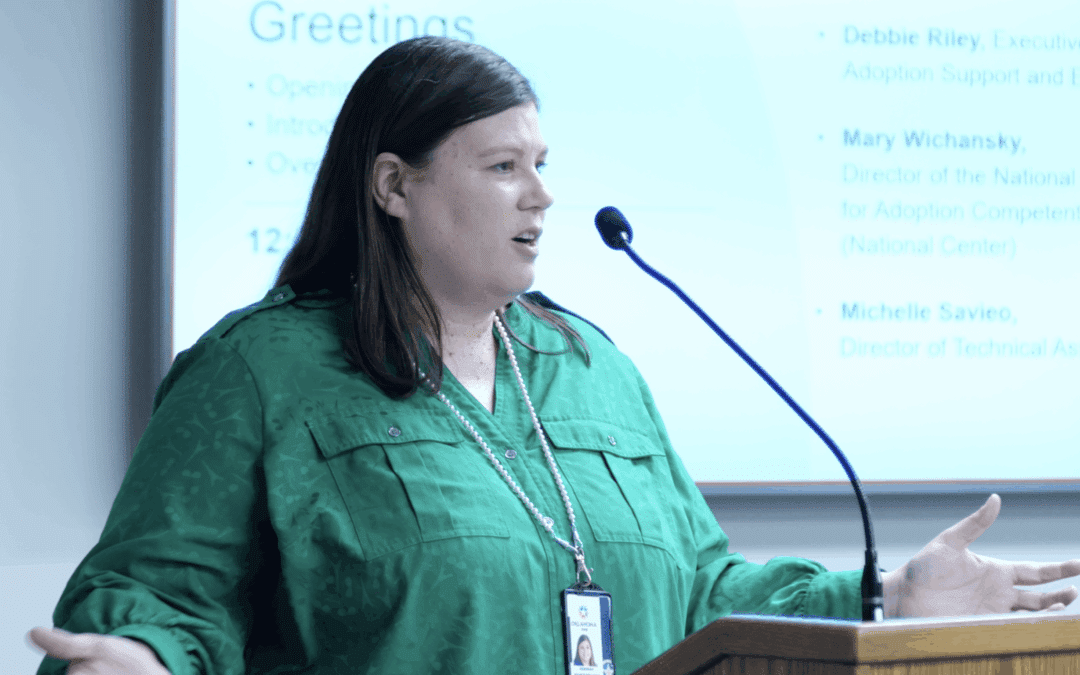
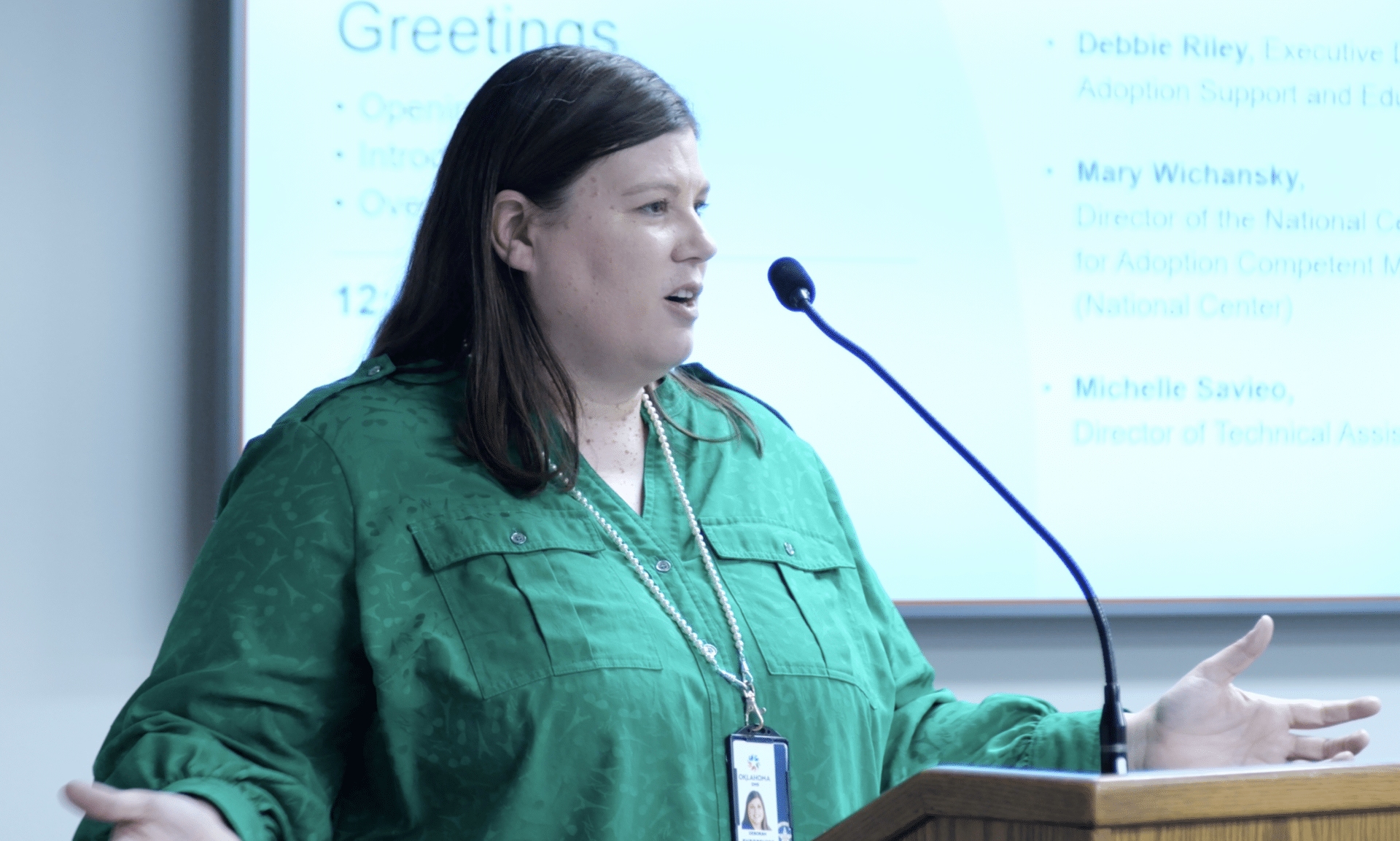
The kickoff meeting was held in Oklahoma City on May 16, 2024, with attendees representing diverse professional and personal backgrounds, like Oklahoma’s Department of Human Services, child welfare organizations, mental health agencies, and families with experience in the child welfare system. During the event, attendees heard from panelists with lived experience about the first-hand importance of adoption competent mental health services; engaged in collaborative brainstorming about ways to enhance mental health services in the state; and set the course for developing a state-wide workplan to bring about meaningful change towards adoption competent services. Attendees expressed their enthusiasm for the collaboration.
Dr. Deborah Shropshire, Former Director of Oklahoma Human Services, said “Particularly since the COVID-19 pandemic, our nation has seen an historic need for increased accessibility to mental health resources. For youth and families who have experienced the child welfare system, access to appropriate mental health providers who understand their unique experiences creates pathways to hope. We are proud to lead the way as the first of thirty sites who will engage in technical assistance over the next five years with The National Center for Adoption Competent Mental Health Services, thanks to the generous support from the Children’s Bureau, and are excited for the positive outcomes this work will bring for our children and families.”
David Johnson, a Program Administrator from Oklahoma Human Services, stated: “I was very encouraged by the attendance of such a wide range of partners who were present for this meeting. It really speaks to the importance of this work and the need for collaboration across our systems. I believe the information presented and the discussions between partners will initiate a more intentional collaboration process going forward.”
With help from the National Center, Oklahoma is poised to create a robust framework that other states can emulate, leading to more competent adoption mental health services nationwide.