SYSTEMS CHANGE
Connecting Systems,
Strengthening Care
The National Center connects systems, strengthens workforce capability, and improves access to adoption competent mental health care so children, youth, and families can achieve greater stability, permanency, and well-being. The National Center partners with States, Tribes, and territories (STTs) through technical assistance, training, implementation support, resources, and shared learning, we help partners strengthen long-term systems capacity, address barriers, and develop financing and access strategies that sustain adoption competency over time. The goal is to embed adoption competency in the policies, practices, partnerships, and infrastructure that guide how systems serve children, youth, and families.
Building Sustainable Adoption Competent Mental Health Systems
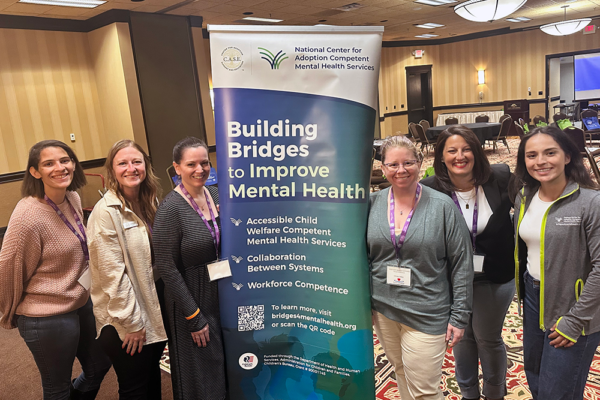 Every system has different strengths, challenges, communities, and resources. The National Center works alongside partners to strengthen cross-system collaboration and develop strategies responsive to local needs. Together, partners build the leadership, workforce, service pathways, financing approaches, and organizational infrastructure needed to make adoption competency a durable part of the system, not a time-limited initiative. This long-term focus supports evidence-informed, trauma-informed child-serving systems that can adapt and continue responding to children, youth, and families.
Five Key Outcomes for Technical Assistance
Increased Collaboration
Building bridges and alliances between CW and MH systems.
Increased Use of Training
Use of existing state-of-the-art adoption competent training for MH practitioners.
Improved Access to Services
Accessibility and delivery of adoption competent MH services to youth with lived experience.
Sustainability
Sustained collaboration, use of training, and expanded access to adoption competent MH services to youth and families with lived child welfare experience.
Enhanced Youth Outcomes
Improved well-being, stability, permanency, and behavioral health of youth.
Technical Assistance That Meets Systems Where They Are
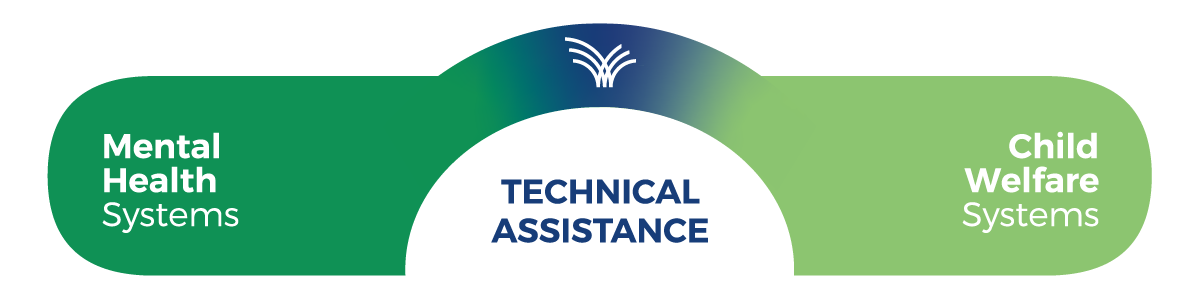 The National Center offers different levels of technical assistance to help States, Tribes, and territories advance adoption competence and strengthen coordination between mental health and child welfare systems.
Universal Technical Assistance
Universal TA provides broad access to knowledge, training, child welfare implementation tools, and other resources that support an adoption competent workforce and stronger cross-system practice.
Intensive Technical Assistance
Intensive TA provides deeper, tailored support to participating States, Tribes, and territories. National Center experts and lived experience leaders work alongside sites to strengthen collaborative and governance structures, address barriers, develop and retain a skilled workforce, and improve service pathways. Support also helps partners identify financing and access strategies and integrate adoption competency into policies, procedures, training, supervision, contracts, and quality-improvement processes so progress can be sustained through leadership, funding, and workforce transitions.
The National Center helps partners advance five interconnected conditions for lasting systems change
- Sustained adoption competency: Reinforcing adoption competent knowledge and practice through ongoing training, coaching, supervision, and continuous improvement.
- Long-term systems capacity: Building leadership, partnerships, data use, and infrastructure that enable systems to maintain and adapt improvements.
- Workforce retention and development: Supporting recruitment, onboarding, professional growth, succession planning, and workplace conditions that help skilled staff stay and thrive.
- Financing and access strategies: Identifying sustainable funding, reimbursement, contracting, referral, and service-delivery approaches that expand access to adoption competent care.
- Institutionalization of adoption competency: Embedding expectations and practices into policy, operations, workforce standards, partnerships, and accountability structures so they endure.
 Lived Experience is Essential to Systems Change
Children, youth, young adults, families, and caregivers bring essential knowledge about how services and systems work in practice. Their perspectives help systems identify gaps, understand barriers, and develop solutions that are responsive to the people they serve. The National Center centers lived experience throughout its technical assistance approach to strengthen cross-system decision-making and build more responsive child-serving systems.
Adoption Competent Resources, Right to Your Inbox
Learn about Universal and Intensive TA, Tribal resources, participating sites, Learning Communities, and evaluation and discover how States, Tribes, and territories are building, financing, and sustaining adoption competent mental health systems.