
Voices That Shape Care:
How Lived Experience Is Strengthening Permanency and Adoption Competent Mental Health Systems
When children, youth, and families share their experiences navigating mental health services, they offer more than personal stories. They provide critical insight into what is working, where systems fall short, and what needs to change. For families connected to foster care, adoption, and kinship care, finding mental health professionals who understand their unique experiences can be challenging. Addressing these barriers requires more than expanding services. It requires systems that recognize and incorporate the expertise of those who have experienced them firsthand.
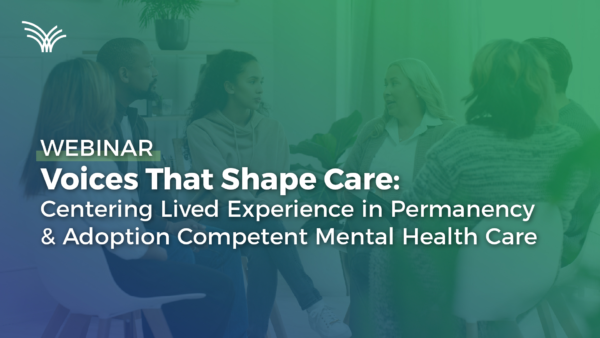
This message was central to the National Center for Adoption Competent Mental Health Services’ October 20, 2026, webinar, Voices That Shape Care: Centering Lived Experience in Permanency and Adoption Competent Mental Health Care. Led by Lived Experience Experts, the webinar examined how meaningful partnerships with youth, parents, caregivers, adults who experienced foster care, and adult adoptees can strengthen mental health services and advance sustainable systems change.
Why Permanency and Adoption Competence Matters
Children and families connected to foster care, adoption, and kinship care often face challenges that require specialized understanding and support. Yet many encounter mental health systems in which providers lack the training to recognize and respond to these experiences.
The webinar featured an interactive role-play facilitated by Debbie Riley, with Arnold Eby, Executive Director of the National Foster Parent Association, and Lily Ford, a lived experience advocate. The activity compared permanency and adoption competent and non-permanency and adoption competent responses to a family situation, illustrating how specialized understanding and family-centered approaches can influence care. By highlighting the importance of understanding trauma, attachment, family relationships, and the role of parents and caregivers in healing, the role-play showed why specialized knowledge and lived experience perspectives are essential to effective mental health care. It also reinforced how adoption competence can translate into more responsive, family-centered practices.
A panel featuring Arnold Eby, Lily Ford, Isabel Stasa, and Staci Jonson further underscored the importance of lived experience in strengthening services and informing systems improvement.
Permanency and adoption competence extend beyond general trauma-informed practices. It encompasses specialized knowledge, values, and clinical skills that recognize how experiences in adoption, foster care, guardianship, and kinship care can affect emotional well-being, identity, attachment, loss, grief, and family relationships. A permanency and adoption competent approach also recognizes parents and caregivers as essential partners in healing. Rather than viewing behaviors in isolation, providers consider the child’s experiences, relationships, and broader environment.
Moving Beyond Listening to Meaningful Partnership
One of the webinar’s central messages was that lived experience must be recognized as expertise, not merely as personal testimony. Youth, parents, caregivers, and others with lived experience offer perspectives that may not appear in administrative data or traditional planning processes. Their insights help identify service gaps, barriers to care, and opportunities for improvement. Meaningful engagement requires moving beyond inviting individuals to share their stories after decisions have already been made. Instead, lived experience advocates should help identify priorities, develop solutions, implement strategies, and evaluate progress. The National Center is working with States, Tribes, and territories to strengthen permanency and adoption competent mental health systems through technical assistance, workforce development, cross-system collaboration, and engagement with lived experience. Examples shared during the webinar demonstrated how these partnerships can influence planning and service delivery.
Michigan: Strengthening Youth Leadership
In Michigan, lived experience advocates helped shape the state’s work plan and identify priorities, including efforts to reinstate the state’s Youth Advisory Board. This work supports a sustainable structure that enables young lived experience advocates to continue informing state initiatives beyond a single engagement. This demonstrates the cross-system collaboration the National Center seeks across all systems, and we will continue to model strategic partnership dynamics with those with lived experience.
Illinois: Connecting Workforce Development with Family Expertise
In Illinois, the National Center engaged 40 parent peer support professionals as Lived Experience Champions. These professionals completed the National Adoption Competency Mental Health Training Initiative (NTI) child welfare curriculum and participated in coaching to strengthen their knowledge and skills in permanency and adoption competence. Their feedback identified five National Center resources as particularly valuable to families, informing efforts to improve accessibility through the National Center’s website and Knowledge Hub. The Champions also contributed to the co-design and implementation planning of a statewide tablet lending program to reduce technology barriers and improve access to specialized mental health services.
These examples demonstrate how lived experience partnerships can inform practical improvements while strengthening the infrastructure needed for lasting systems change.
From Lifting Voices to Lasting Change
Building permanency and adoption competent mental health systems requires professional expertise, partnerships, and the insights of those who have experienced these systems firsthand. Organizations can begin by creating meaningful opportunities for lived experience advocates to participate in planning, advisory groups, workforce development, and service improvement efforts. Equally important is demonstrating how their contributions influence decisions and outcomes.
As the National Center continues working with States, Tribes, territories, and national partners, meaningful lived experience engagement remains central to building more coordinated, accessible, and responsive mental health systems.
The question is not simply whether we are listening to lived experience voices. It is whether those voices help shape the decisions, practices, and systems that affect families every day.
 Take the Next Step
Visit bridges4mentalhealth.org to explore resources on permanency and adoption competence, training opportunities, and strategies for strengthening lived experience partnerships.
Watch the webinar: Voices That Shape Care